Wednesday, 29 August 2012

The hunt for perfect cassoulet: the Fête at night


We spent the final days of our cassoulet trip roaming around the region and ducking in and out of the Fête, and soon realising that the Fete du Cassoulet is about much more than one single dish. The quiet and sleepy town of Castelnaudary is filled with bands, bars, markets and thousands of revellers, who pile into huge tents to eat steaming pots of cassoulet; like Oktoberfest only with extra beans.


With all the action and merriment, the regional dish almost becomes secondary to the fun. Plenty of cassoulet is eaten, though it is not the best you can find or make. But to be honest, this is hard to fault. Local producers – largely wine growers, goose and duck farmers, bee keepers and charcuterie makers – line the streets selling fantastic stuff. A flotilla of handmade paddleboats - each representing a different local youth club - snakes down the river. Bolshy teenagers edge their way, one by one, down a horizontal flagpole over the river, trying to grab the French flag before throwing themselves into the water. And the drinking – there’s more than a drop of beer consumed, which leads to some pretty amusing dancing.


For the dedicated food-lover, there is still so much to enjoy in the region. The weekly food market at Revel (Saturdays) has producers and growers of the most incredible tomatoes, aubergines, garlic, goose, duck, honey, preserves, poultry, rillettes, charcuterie and of course lingot beans. Veer off the beaten track and away from the cassoulet tents, into a small, family-run restaurants where you can find very good, honest and truly local food at a tiny price. There’s a co-operative that takes in meat from all of the local farmers, selling it from a shop which has queues snaking right out of the door. And the unofficial bartering system is wonderful! Tomatoes are swapped for strawberries, whole lambs shared around the neighbours in return for a bit of help with shepherding. Gluts get distributed among friends and neighbours and it's nice to see that people are watching out for one another.


But what of the cassoulet? We’ve got a pretty good idea in our heads. Free range British goose, confit in rare breed pork fat, our own Toulouse sausages and fat cubes of Old Spot pork belly. We’re heading back to Blighty to have a play with the recipe – and we’d love your advice if you have any. Have you eaten or do you know how to make truly tremendous cassoulet? Go on, share your wisdom...

And here's what to do when you have so much veg that you can't eat any more.


Friday, 24 August 2012

The hunt for perfect cassoulet; Fète begins!

Day two begins with picking over the cassoulet recipe, and Ursula brings to the table a huge terracotta-coloured plant pot cassole, the vessel from which the dish gets its name. The wide, fluted top gives a large surface area for that all-important crust, while the depth allows for plenty of stew and bits of confit duck and sausage.


The recipe isn't a quick one, and as Ursula talks us through each step it's easy to see why people are so fiercely protective of their own method. Beans - lingot to be truly authentic - must be soaked overnight and then cooked in a homemade chicken stock, enriched by the skin and bones from pork belly. Toulouse sausage, belly and lardons are seared before all of the constituent parts are layered into the dish. Traditionally confit duck or goose is placed in the centre of the stew with the rest of the meat, however Ursula prefers to nestle the confit on top to crisp up the skin (we like her style). The cassoulet is then baked in a low oven for up to three hours, the surface crust stirred in each time it forms to add flavour and body. This should supposedly be done seven times, however three or four is all you can usually manage in the cooking time. Feeling well versed in the ways of cassoulet, we head out to lunch.

The first cassoulet of our quest is eaten at La Calèche in Peyrens, a small family-run restaurant in a village just north of Castelnaudary. The cassoulet is placed before us and we eagerly break the crust, and start to fish around for the best bits; out come pieces of duck and generous lengths of Toulouse sausage, though there's not an awful lot of pork belly (us, greedy?). The beans are creamily tender without losing their shape, but the stock lacks oomph, and black pepper has been added a little too liberally. A tasty, solid and respectable dish, but we think there's better to be found.


The fète isn't just a celebration of the region's best known dish, but also a chance for the area to throw a bit of a party. The main square is filled with marquees, which in turn are filled with bowls of cassoulet, but before any of that everyone cheers as the Président du Comité d'Organisation de la Fête declares the festival open, and bands, stalls and bars burst into life. The crowd is entertained by what sounds like a French Bryan Adams impersonator; still full from lunch, we slink home for salad and cider. Two cassoulets in one day is too much even for us. 

Official merchandise
Whatever the French for 'mariachi band' is

The official mascot


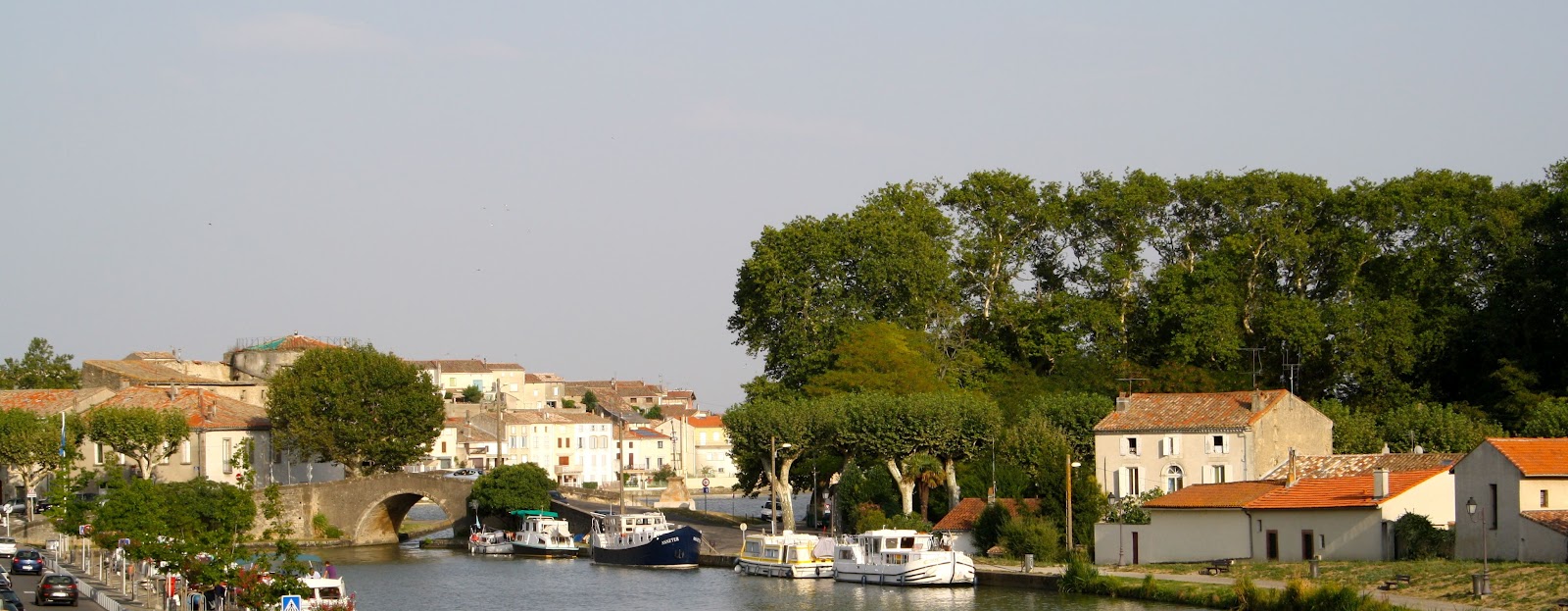
The view from the town's bridge

Thursday, 23 August 2012

The hunt for perfect cassoulet; a truly local dish

This week we're in Castelnaudry, just east of Toulouse, for the annual Fête du Cassoulet. Quite why this celebration of stew is in August - when temperatures can tip 40C - is a little baffling, but we've put on our sunhats to embark on a mission to find the best Cassoulet around.

Two very good friends of the Ginger Pig moved to the area nine years ago, and have spent their time immersed in the culinary history and identity of the region, as well as growing vegetables galore, and rearing ducks, chickens and two wonderful children. Chris grew up with Ginger Pig owner Tim, and it's fair to say that without Chris' wife Ursula, the Ginger Pig would not be the business it is today. Daughter of a renowned Swiss butcher and very able cook, Ursula's support helped us grow from a little stall at Borough Market to the five shops we run today, and she still comes back each December to help us at Christmas.


Driving from Carcassonne (because, obviously, we had to fly somewhere beginning with carcass) to Chris and Ursula's home in the hills, we get a taste of what is grown in the region. The agricultural makeup changes quickly as we move; at first vineyards, then sunflowers - heads bowed in defeat, almost ready to harvest - and then grains, pulses and legumes. The area is home to goose and duck farms too, a natural evolution stemming from the migratory path of these birds. Geese and ducks used the area as a resting spot as they flew south, and spilled grains from the September harvest provided rich pickings for the birds to fatten up to continue their journey. 


Over lunch - homemade bread and pâte de campagne, local ham and salads from the garden - Chris and Ursula set out why cassoulet is famed and fought over throughout the region. Although recipes vary from cook to cook, cassoulet is essentially a stew of white beans, pork belly, confit duck or goose and Toulouse sausage, a marriage of all that the region does well and a truly local dish. Many of the ingredients are preserved over summer and autumn to provide sustenance throughout the winter, and so cassoulet is not only a dish to make the most of the region's best produce, but something to rely on when fresh food is scarce. 

Predictably there's amicable contention over the true home and recipe of cassoulet, and this is all brought together for the Fête; the opening ceremony of which is tonight (move over Danny Boyle!).

The dish is yet to pass our lips, and so we'll leave you with some photos of Chris and Ursula's wonderful garden, while we work up an appetite for a cassoulet lunch.


Thursday, 9 August 2012

Two ways with rump

Last week we sold cows and cows'-worth of our 55-day dry-aged rare-breed rump, but we kept a few back to see what an extra week in the hanging room could do. Phenomenally tender and oh-so tasty is what we got, and it's all in the shops from today. With regards to dry-ageing, we've got something *really* *very* exciting planned for autumn. It's a top secret for now, so you'll have to watch this space (and get your teeth around this in the meantime). 

Either buy it thick and sear it quick, or get chopping and make tartare; here's what to do with our 60-day dry-aged rump this weekend.

Size matters (that's an A3-sized piece of paper)
To BBQ or griddle

1. Get our butchers to cut you one nice thick steak; at least an inch, if not a couple.
2. Let it come up to room temperature, and get the embers white-hot or a griddle over the highest heat.
3. Cover the steak with a little oil, salt and pepper just before it goes on the grill.
4. Grill for 5-6 minutes either side on the barbie, a bit less in a griddle pan. If you don't like it quite so bloody, stick the steak in the oven at 180C for 10 minutes once it's come off the grill.
5. Once cooked, let it rest for at least 10 minutes. Trust us, you'll thank yourself for waiting when you've got steak juice dribbling down your chin.
6. Thinly slice, tuck in, share if you must.


Tartare

1. Finely chop 150g steak per person, trimming off any fat or sinew as you go. Rump that has been hung this long as just as tender as fillet, but less than half the price and has bags more flavour. No flies on us, see?
2. Combine with chopped shallots, capers and gherkins, generous amounts of salt and pepper, a few dashes of Worcestershire sauce and some chilli sauce for a bit of a kick; we used a dash of The Ribman's Holy swear-word sauce, but Tabasco will do just fine.
3. Stir, taste, and add more of anything you think it needs.
4. Pile it onto a plate, make a hollow in the top, add an egg yolk, and eat with a bit of toast.

For an Asian twist on the French classic, use spring onions, fresh coriander, fish sauce, Sriracha and a little minced ginger. Season with salt to taste, omit the egg and serve with prawn crackers.


Friday, 3 August 2012

55-day rump, givvus a medal!

Move over beach volleyball, we've got the best rumps in town: Longhorn and Galloway beef, dry-aged for 55 days. Why? Because dry-aging lets moisture out of the meat, concentrating the flavour making for beef that is simply beefier than its younger counterparts. The natural enzymes get to work to break down the fibres and connective tissue, so as well as great flavour you get wonderful texture too (in your face, tender fillet!).

We'll clean 'em up for you good and proper, promise

Preferred steak of Ginger Pig owner Tim, rump should be cut fairly thick, seared hot and fast, well rested and served medium-rare. 

These ol' rumps are in our five London shops from today; get your 55-day steak on or a rump roasting joint before someone else beats you to it. Here are some recipes to get the creative juices flowing...


Friday, 6 July 2012

Superb saucisson - the Ginger Pig visits Mont Charvin

Mont Charvin is producing saucissons and cured meats in the Haute-Savoie, with the emphasis firmly placed on quality rather than quantity. Tim tasted their produce at a market in France, and was so impressed he had to find out more about them. He did, and you can now buy Mont Charvin charcuterie in our own Ginger Pig shops – and nowhere else in the U.K.


You can read the story of Mont Charvin below, but first a little saucisson of what we’ve got in our Hackney, Shepherd’s Bush and Moxon Street shops:

Saucisson artisanal traditionnel (with just salt, pepper and garlic)
Saucisson aux noisettes entières (with whole hazelnuts)
Saucisson aux cèpes (with ceps/porcini mushrooms)
Saucisson fines herbes (with herbs de Provence, basil and tarragon)
Saucisson campagnard (a large slicing cured sausage)
Coeur de jambon (outstanding cured ham)
Coppa (cured neck of pork)

They’re exceptionally well-made – high quality meat, the right amount of fat, all natural casings, and the precision spicing that comes from years of experience. They are richly savoury, and the texture is spot on; emulsified without blending into one indistinct texture, meat, fat and spice working together without getting lost. Really outstanding stuff.

The story

Establishing the business some 20 years ago wasn’t easy. They began producing cured meats using premium ingredients – with the price tag that accompanies – while consumers were starting to look to supermarkets for cheaper food. Mont Charvin stuck with it, and now distribute to retailers across the region, as well as exporting further afield (including coppa to Italy!). Owner Christian refused to sell to the Ginger Pig unless we went to visit him in the Savoie, to learn about his product and how it is made. Oh, if we must…


Christian spent 17 years as production manager before taking control of the business, which currently employs 16 members of staff. He has seen consumers flock to supermarkets in droves before gradually returning to the small independents again, in part driven by tourists’ enthusiasm for eating authentic local produce.  A number of local cheese-makers and charcuteriers have formed a cooperative to sell their produce in the area, which remains an independent enterprise despite attempts at buy-in from bigger chains. There used to be many more small producers in the area but most have either been swallowed by big business, or have tried to emulate the growth strategy of larger companies – with the subsequent drop in quality – and gone bust.

We arrive to meet Christian at his Annecy production unit, but our meeting is interrupted just a few minutes in when the whole business stops for a break at 9am – five hours after work begins each day. This tradition is strictly adhered to, and sees all 16 employees get together for coffee, local bread, a selection of their charcuterie and a ham made from rolled belly.  The work is very labour intensive and relatively unindustrialised, with only a few mechanised concessions to give greater control over the process, with no loss of tradition and quality; this morning break is crucial to keep everyone going.


Christian with the vacuum machine, which helps to produce a tight texture

The pork is from pigs reared outdoors, by small producers in the local area. Christian dreams of one day farming their own animals for production – to be fed on cereal and whey, the latter a by-product from local cheese producers – but for the time being will continue to buy from trusted local sources.

They take between one and two tonnes of pork each day, which is prepared by the local abattoir butchery to strict specifications. Bellies are taken of the bone but left in the piece, and shoulders are carefully boned, trimmed of any gristle and sinew and divided into separate muscles. For their cured pork loin  – “bacon”, as it is referred to in the region – they take only the boned out loins from female pigs for flavour and succulence. Sheets of meticulously trimmed back fat are brought to a very low temperature, so that they break into neat little chunks when cut rather than melting away into the mix. 


This fat is one of the key elements to the saucisson, and getting the right balance of fat to meat and the right ‘cut’ is crucial. Many producers add lactose for succulence and moisture, however Mont Charvin prefers to take heavier pigs – 110-130kg – with a greater percentage of fat to do this naturally. The meat for their saucisson must be cut with absolute precision – and never minced – to ensure that the end result has the right texture.

Christian mixes his own spices, as he doesn’t trust the companies making pre-mixed blends not to change their recipes. There’s a huge grinder for pepper, which has a number of different-sized grinds for the various recipes. Christian tells us that he can make 10 different sausages using the same ingredients, and it’s not until we taste a few that we really see what he means. We try three saucisson made only with pork, fat, garlic, salt and pepper and natural casings, but due to the different-sized chunks of meat, different ratios and varying grinds of pepper, we have three completely different products. It’s not just that one is more peppery than the other, or has larger chunks of fat, they really are very distinctive, and we wouldn’t have guessed they were from the same base ingredients.


Pepper grinder
Spice blends ready to go into the mix
A different coloured string for each saucisson
The freshly made sausages gradually make their way through a labyrinth of drying rooms, all at differing precise temperatures. From the production floor they go into a fridge to set for a day, before going straight into a room at 25C. The smell is, well, like you’d expect pork and garlic to smell as they’re starting to ferment, but it’s this first blast of warmth that helps to ensure the texture of the finish sausages. They go from here through a series of increasingly colder rooms, which – although monitored by a snazzy control room – Christian checks several times a day to make sure everything is right. Saucissons are dried for around three months and hams for six; Mont Charvin will say “until they are ready”.


Tuesday, 26 June 2012

Martin's ribs

Waterloo butcher Martin has been swatting up on the Ginger Pig meat book, and has chosen one of Fran's delectable recipes to prepare for his Waterloo customers.

Jacob's rib - or short ladder ribs - are big meaty beef ribs, providing bags of flavour and succulence for a fairly small sum.  Martin has taken the hard work out of Fran's spiced rib recipe and rubbed the ribs with the spice mix for you, meaning they're ready to be glazed and oven baked (or, fingers crossed, cooked on the BBQ). His marinaded ribs will be available for the next two weeks so hop to our counter in Greensmiths, Waterloo, if you fancy putting some in your face.

Here's the recipe if you want to make them at home.
Recipe by Fran Warde, from the Ginger Pig Meat Book.

Serves four

For the ribs
1/4 tsp cayenne pepper
1/2 tsp paprika
1/2 tsp ground cumin
1/2 tsp garlic powder
1/2 tsp black pepper
1/2 tsp salt
8 individual Jacob's ladder ribs
Vegetable oil for baking tray

For the glaze
25g butter
25g sugar
2tbsp white wine vinegar
1tbsp Worcestershire sauce
Juice of half a lemon
2 tbsp ketchup
1 tsp mustard
2tbsp honey

1. Mix together all the spices, garlic powder and seasoning, place in a resealable plastic bag, add the ribs and shake the bag to coat the ribs. Leave them in the bag, in the refrigerator, to marinade overnight. Remove them from the fridge at least an hour before you'd like to start cooking them.

2. Melt the butter for the glaze in a small saucepan, over a low heat, add the sugar and vinegar and stir until dissolved. Mix in the remaining ingredients and stir until smooth.

3. If cooking on a BBQ, the ribs will need a good 1.5 hours over a lowish heat, with fairly constant turning. If cooking in the oven, preheat to 170C / Gas Mark 3, place on a lightly oiled baking tray and cook for 1.5 hours, until cooked through. Both methods of cooking require the ribs to be frequently basted with the glaze - use a brush to paint it on evenly, delivering a wonderful, sticky finish.